Ecology is still one of the 10 crucial consumer trends for 2010!

•January 30, 2010 • Leave a Comment

This post is extratcted from the website trendwatching.com, published in January 2010. It confirms that eco-fatigue isn’t going to happen this year and future profits are even green.


The numerous green opportunities we highlighted in our ECO-BOUNTY briefing are still up for grabs. From ECO-STURDY to ECO-ICONIC to ECO-TRANSIENT. So what else is building in the Green Arena? How about ECO-EASY:

While the current good intentions of corporations and consumers are helpful, serious eco-results will depend on making products and processes more sustainable without consumers even noticing it, and, if necessary, not leaving much room for consumers and companies to opt for less sustainable alternatives to begin with.

Which will often mean forceful, if not painful, government intervention, or some serious corporate guts, or brilliantly smart design and thinking, if not all of those combined.
Think anything from thoroughly green buildings, to a complete ban on plastic bags and bottles, to super-strict bluefin tuna quota — anything that by default leaves no choice, no room for complacency, and thus makes it ‘easy’ for consumers (and corporations) to do the right and necessary thing.

Some recent, random and hands-on ECO-EASY examples, from governments to B2C brands, to get you going (or better, to copy or build on):

  • The small town of Bundanoon in Australia’s New South Wales has banned the sale of bottled water for environmental reasons. The community voted to replace branded water bottles with empty bottles labeled “Bundy on tap” that can be filled and refilled with water from taps and fountains on the main street.
  • In September 2009, French President Nicolas Sarkozy announced plans to introduce a carbon tax to reduce greenhouse gas emissions in France. Polluters will have to pay EUR 17 per ton of carbon emitted, which includes not only businesses but individual households as well. The tax will cover 70% of the country’s carbon emissions and bring in about EUR 4.3 billion of revenue annually.
  • The government of Mexico City recently passed a law restricting businesses from giving out plastic bags that are not biodegradable. Mexico City becomes the second large metropolitan area in the Western Hemisphere to outlaw the bags. San Francisco enacted an ordinance in March 2007 that gave supermarkets six months and large chain pharmacies about a year to phase out the bags.

  • UK sandwich chain Pret a Manger decided to stop selling tuna sandwiches after the Earth Day 2009 release of End of the Line, a documentary exposing over-fishing of the world’s oceans.

Further very interesting information about the eco-bounty trend on trendwatching.com.

Katsoa planned to participate in the 2010 Ethical Fashion Show

•January 30, 2010 • Leave a Comment

The Ethical Fashion Show has been created in 2004 by Isabelle Quéhé. It’s a show about ethical fashion which takes place once a year in Paris, during the October Fashion Week, and which gather more than 100 brands…

Since 2009, Ethical Fashion Show develops editions abroad, like in Milan, Barcelona and soon NYC.

For more information, please click on www.ethicalfashionshow.com/

Not to spend money, they spent our lives – A burning issue that reinforces our policy

•January 30, 2010 • Leave a Comment

This post comes from the article “Pulmonary epidemic for the people who fade jeans ”, written by Laure Marchand and publiqhed in Le Figaro.fr the 1st january 2010. It proves that people start to be aware of the absurdity of the system in which we live.

Désormais interdit, le sablage utilisé pour vieillir le denim a provoqué des cas de silicose en Turquie.

Yilmaz Kartal, 31 ans, gagne désormais un peu d’argent dans un salon de coiffure à Esenler, un quartier populaire perdu dans la grande banlieue d’Istanbul. «Même raser un client me demande un effort, j’ai le souffle coupé», raconte-t-il. Ce grand brun à la carrure d’athlète sait que le jour se rapproche où il ne pourra plus se passer d’un appareil respiratoire, comme son cousin, Mehmetça, 30 ans : «Il n’est même plus capable d’aller jusqu’au bout de la rue, à 100 mètres.»

En sursis, Yilmaz et Mehmetça sont atteints de la silicose, une maladie pulmonaire incurable répandue chez les mineurs de fond. Les deux jeunes hommes l’ont contractée en travaillant dans un des innombrables ateliers de textile de la métropole turque, qui étaient spécialisés dans le sablage des jeans. Cette technique, utilisée à l’origine pour décaper les façades, consiste à propulser du sable à haute pression sur la toile afin de lui donner cet aspect usé tellement à la mode en Occident. De 2002 à 2005, Yilmaz et son cousin ont délavé du denim douze heures par jour, six jours sur sept, pour un salaire de 600 livres (270 €) : «À l’époque nous ignorions les risques. Nous travaillions dans une pièce de 2,5 mètres carrés, très mal ventilée, et pour toute protection, on nous avait donné un mauvais masque qui coûte 10 kurus (45 centimes d’euro).»

Depuis que les médecins ont repéré les premiers cas de silicose, il y a cinq ans, 44 ouvriers au moins en sont morts. Le pire reste à venir. «On estime qu’entre 5 000 et 10 000 personnes sont concernées», explique Abdulhalim Demir, à la tête d’un comité de soutien de défense des malades. Ce père de trois filles, âgé de 28 ans, a découvert qu’il avait la silicose en faisant son service militaire : «Je n’arrivais pas à courir. Ensuite, j’ai commencé à perdre le souffle même au repos.» Dans son village, à l’est de la Turquie, 300 jeunes qui avaient migré à Istanbul pour être embauchés dans les ateliers de textile sont également touchés. Leurs poumons sont criblés de petites taches qui se perceront bientôt, comme celles qu’il montre sur une radio d’un organe atteint. «Lorsque je travaillais, il y avait tellement de sable dans l’air que je ne voyais rien, je touchais les jeans en tâtonnant.»

Jusqu’à ce que les médecins détectent l’épidémie de silicose en Turquie, cette affection pulmonaire était connue pour mettre de longues années à s’installer. «Six mois d’exposition ont suffi pour que les ouvriers du textile développent la maladie», souligne Yesim Yasin, universitaire spécialisée en santé publique.

Un pilier de l’économie turque

Le ministère de la Santé turque n’a interdit qu’au mois d’avril le délavage des jeans avec la technique du sablage, alors que celle-ci n’est plus autorisée dans l’Union européenne depuis 1962. Le textile est un pilier de l’économie de la Turquie. À elle seule, la production de jeans emploie 300 000 personnes. À partir des années 1980, les grandes marques ont commencé à délocaliser leurs usines en Turquie. Et ont fait appel à des petits patrons locaux pour traiter le denim. Abdulhalim Demir «travaillait pour un sous-traitant de Tommy Hilfiger». Yilmaz Kartal voyait passer des étiquettes «de luxe comme Collezione, Diesel, Dolce & Gabbana…»

L’immense majorité des sableurs travaillait sans sécurité sociale. Deux cents d’entre eux viennent d’entamer des procès contre leurs anciens employeurs et les municipalités qui avaient des ateliers sur le territoire pour tenter d’obtenir des indemnités. «Il y a urgence. Notre espérance de vie est très limitée et le gouvernement refuse de nous verser une pension d’invalidité, déclare Abdulhalim Demir. Nous avons besoin de ces premières condamnations pour remonter la chaîne des responsabilités.»

L’amertume est d’autant plus forte que le laser permet d’obtenir un résultat similaire au sablage. «Mais une telle machine coûte 125 000 € et délave 200 jeans par jour. Nous en coûtions 15 et nous en usions 1 000. Pour ne pas dépenser d’argent, ils ont dépensé nos vies», résume-t-il. Le décapage à haute pression a été remplacé par un produit à base de permanganate de potassium. «Mais utilisé sans protection, il est hautement toxique», explique Yesim Yasin.

Depuis l’interdiction ministérielle, les inspecteurs du travail ont néanmoins fermé une vingtaine d’ateliers qui avaient toujours recours au sablage. «On nous rapporte aussi qu’il est toujours utilisé dans des villes de province», ajoute la scientifique. Et la technique se délocalise vers des pays encore moins regardants que la Turquie sur les conditions de travail, comme l’Égypte ou le Bangladesh.

My business model canvas

•January 30, 2010 • Leave a Comment

This is the current business model canvas of my business proposal.

Next Practice more than Best Practice

•January 30, 2010 • Leave a Comment

A best practice can be defined as a method, technique or process that has delivered over time superior outcomes than those achieved by any other method, technique, process. In other words, it shows how to get the best results with the least amount of effort and unforeseen difficulties. For my business idea, I expect to take up the methods and the partnerships used by existing companies, in the clothing industry, which respect the environment and the fair trade principles. Thus, for instance, I plan to optimize my production and to get 0 overcapacity – 0 out of stock.

But Next Practice is the future because it can open up new ways of working. They are generated by informed practitioners, aware of the strengths and limitations of conventional ‘best’ practice, who try to find new and more effective solutions to contemporary problems.

Some next practices that I could apply to my business proposal are:

*        Be unique: ecological and fair trade bags that look trendy are still very rare. So, buying our products enables the customer to distinguish himself and to draw attention to his green lifestyle. This feeling of uniqueness will be reinforced when we design limited editions.

*        Break pricing rules: in a sense, it’s true because our bags’ prices are equal to the competition whereas our production costs are much higher. We could have chosen to make more profit by raising our prices on the behalf of ecology and fair trade.

*        Apply current trends: the current quest for a sustainable society clearly applies to my business idea.

*        Special locations: to a lesser extent, Katsoa highlights the location of origin of our raw materials (for instance, the Amazon Forest for the natural rubber).

The strategy of Katsoa

•January 30, 2010 • Leave a Comment

Here are more information concerning Katsoa’s strategy.

Prices

Bags’ prices will range from €29 to €195 so that a large number of people could afford it.

Marketing

To promote our products, we have decided to resort to buzz marketing instead of advertising.

We aim to have a strong, active presence on the web.

As soon as we will gather investors and launch the production, we plan to publish videos on Youtube and to register the company on Facebook and Twitter. By this way, our fans and followers could get the daily buzz, share it with his friends and get a member feeling.

Moreover, we are linked to websites and blogs about ecology, sustainable development, fair trade in order to get more credibility; and we are also linked to websites and blogs about fashion to reinforce the trendy side of our brand.

Outlets

For the beginning, we want to distribute our bags in a selection of outlets, in Paris: department stores Printemps and Le Bon Marché, Kiliwatch shop, the shop of the Palais de Tokyo and the brand new Merci concept store.

Our bags are made from sustainable and eco-friendly materials

•January 30, 2010 • Leave a Comment

Katsoa will work directly with small producers, who are organized into cooperatives, of organic cotton and natural latex from the Amazon.
Our goal is to create a supply chain that respects both humans and the environment.

1. Organic cotton

The fabric of our bags will be in organic cotton, cultivated by a cooperative of small producers in Benin. Neither fertilizers nor chemical pesticides are used to produce this cotton. By this way, we want to support the development of this sustainable agriculture.

We would like to encourage it by applying the principles of fair trade and paying twice the world market price in order to allow them to live decently from their work.

2. Ecological leather

95% of leathers are tanned according to modern tanning procedures based mostly on chromium. But this metal lingers in the environment and pollutes water surrounding tannery plants.

That’s why we will only use “ecological leather”, that is to say a leather naturally tanned with vegetable extract such as Acacia.

3. Natural rubber

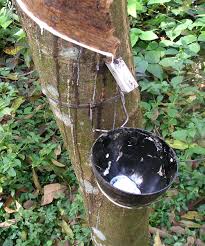
For some pouches, we will use natural rubber from the Amazon, the only place on earth where rubber trees grow in the wild. It’s is renewable and biodegradable contrary to synthetic rubber which is realised from exhaustible, fossil resources. Extracting latex from rubber tree is a sustainable way to fight against deforestation.

We plan to work with Amopreab, an association of Seringeiros – the rubber tappers – that we will pay 30% more than the market price, so that this rubber culture is profitable. Moreover, they use a process that allows them to transform latex into rubber sheets, without any industrial intermediary processes. The sheets of rubber are then directly sent to the factory. By this way, the Seringueiros sell semi-finished products and thus receive a higher income.

The following video shows you the process already used by the company Veja, for producing natural rubber.

Concerning the assembling, we will work with a Turkish plant that respects the international laws of the International Labour Organisation: no children work, good work conditions, decent wages, respect of hours and overtimes.

Katsoa, ecological and fair trade bags

•January 30, 2010 • Leave a Comment

Katsoa is a French business idea that designs ecological bags for women and men.

It was born from the willingness to offer a new wayof thinking and consuming by creating a global chain that emphasizes solidarity and the environment, from the producers to the consumer.

Our goal is to conciliate fashion with respect of the environment and of the humans.

Further information on:

http://entrepreneur-ggsb.wikispaces.com/my_carole_roger

http://www.slideshare.net/caroleroger/katsoa-ecological-and-fair-trade-bags

Hello world!

•January 30, 2010 • 1 Comment

Hello world!

Here is a blog about my business proposal called Katsoa.

I let you discover what it’s all about and please, do not hesitate to leave a comment or contact me if you have any questions.

 
Design a site like this with WordPress.com
Get started